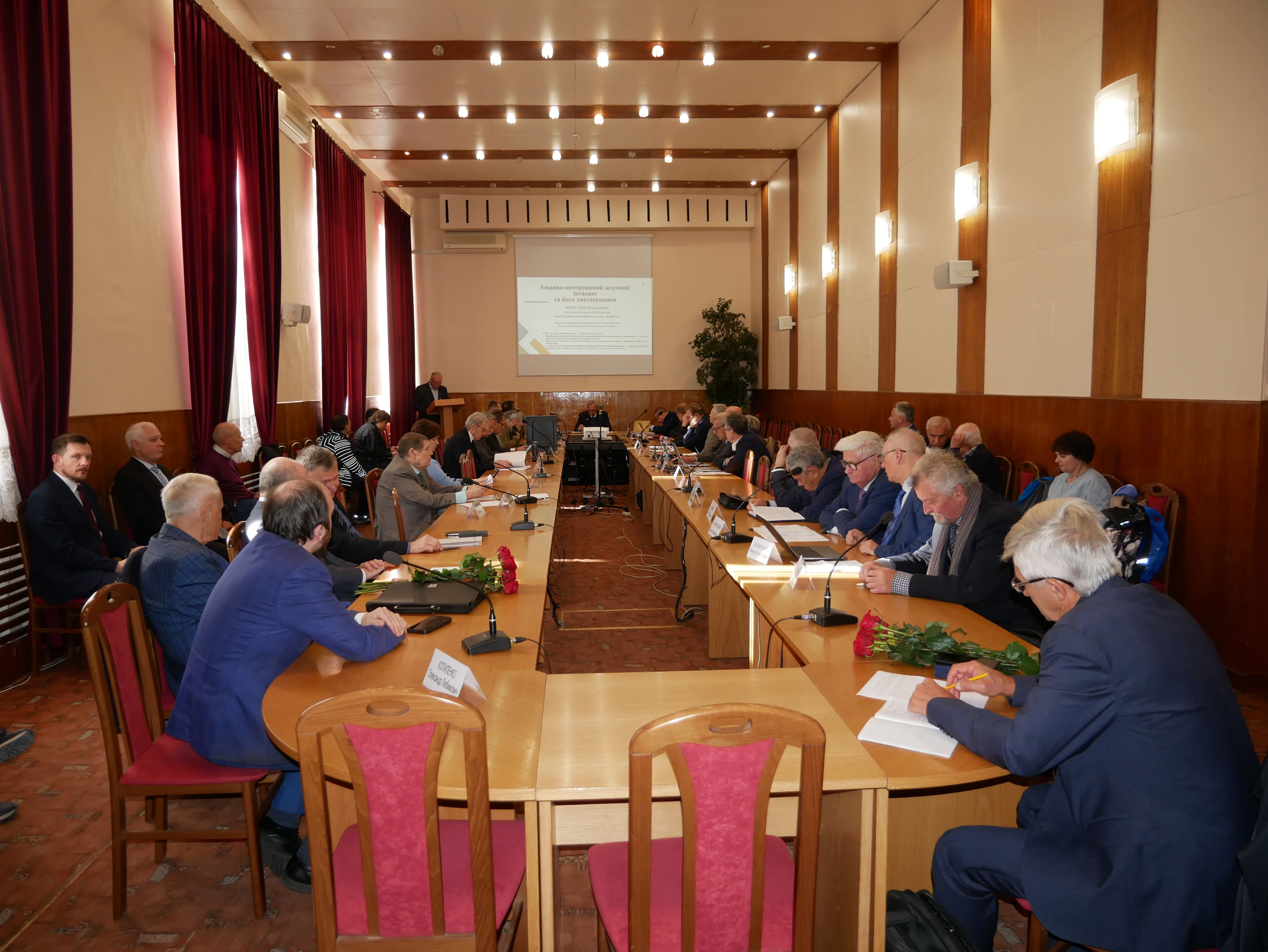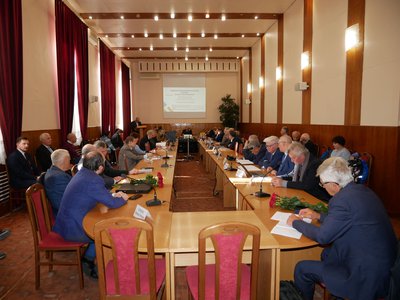
On October 14, 2026, Prof. Yurii Krak (Department of Theoretical Cybernetics at FCSC, Corresponding Member of the NASU) delivered a report titled "Human-Centric Artificial Intelligence and Its Applications" at the Presidium of the National Academy of Sciences of Ukraine.
Prof. Krak presented joint research by KNU and the Glushkov Institute of Cybernetics focused on solving the AI "black box" problem. Based on the "Human – Technology – Context" concept, the team developed Explainable AI (XAI) methods to convert complex neural network outputs into human-understandable logical rules.
Key Practical Applications:
• Medicine: Explainable Cardio-MRI and ECG analysis for diagnostic support;
• Security & UAVs: Visual drone localization under adverse conditions;
• Info Security: Detecting political propaganda and cyberbullying using LLMs;
• Urban Management: Optimizing traffic flow and reducing CO2 emissions in Khmelnytskyi.
The NASU Presidium highlighted the strategic importance of explainable AI in building trust and safety in critical domains.
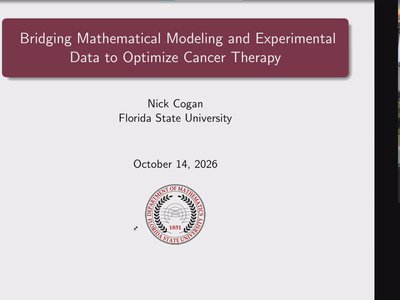
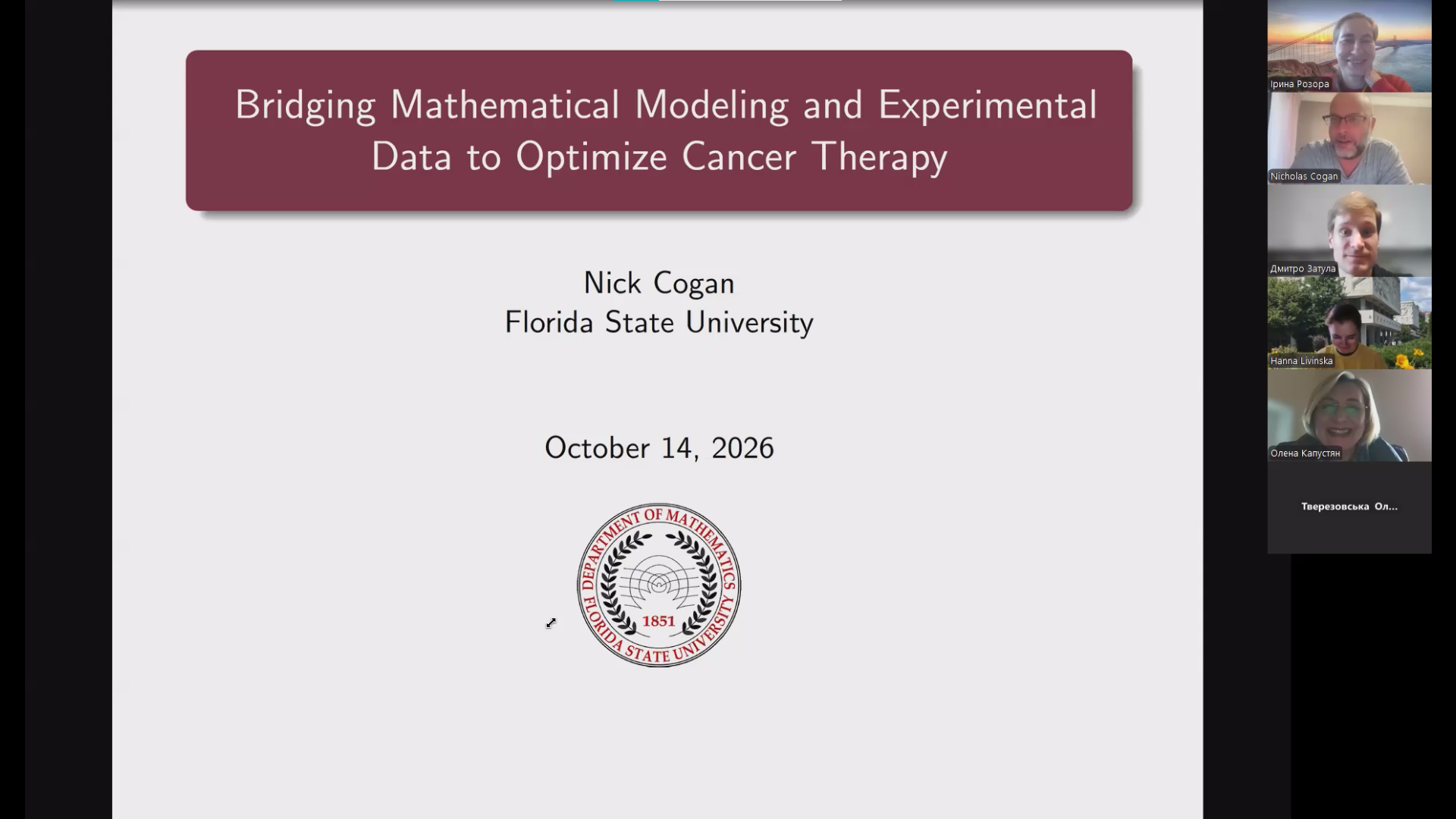
On October 14, 2026, as part of the Scientific Seminar of the Faculty of Computer Sciences and Cybernetics, an open online lecture by Prof. Nicholas Cogan (University of Florida, USA) titled "Bridging Mathematical Modeling and Experimental Data to Optimize Cancer Therapy" took place.
For those who could not attend the live session or wish to review the material, the video recording is now available online.
🎥 Lecture Recording: Watch video recording
✉️ If you have any questions regarding the lecture or wish to contact Prof. Cogan, please reach out to the Secretary of the Faculty's Scientific Seminar, Vadym Ponomarov: vponomarov@knu.ua.
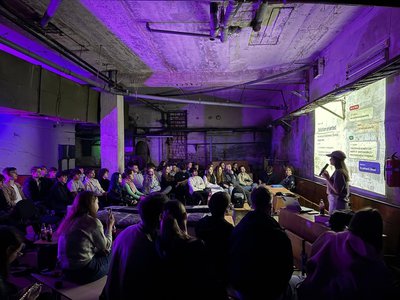
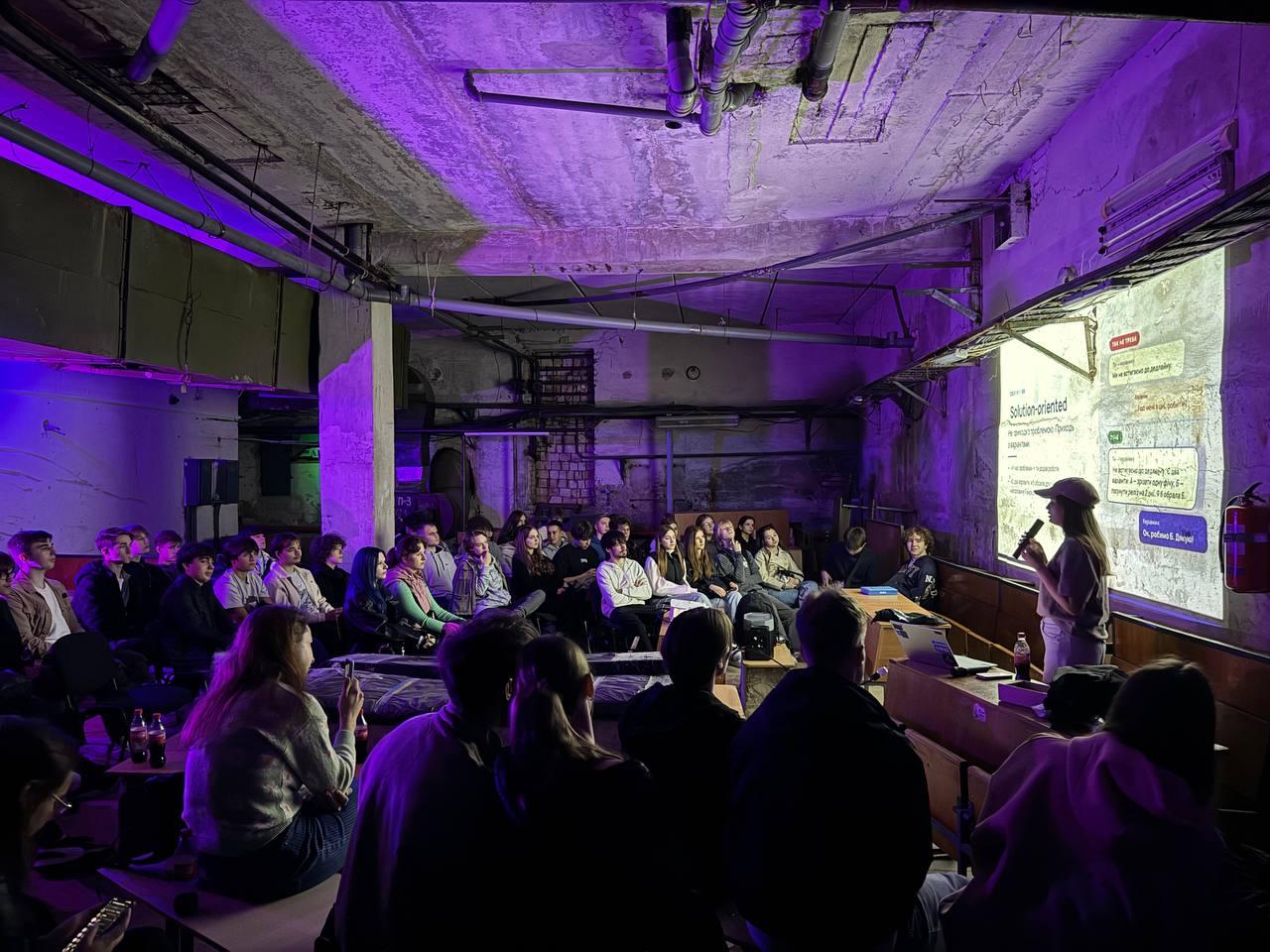
On October 10, 2026, students from FCSC and FIT at Taras Shevchenko National University of Kyiv joined a cybersecurity meetup organized by the Ghost of Sheva community, supported by Virtual Routes and Hackathon Expert Group.
The event served as the final gathering for two cohorts of the certificate program "Basics of Cybersecurity for Small Organizations," funded by a Google.org grant. Students attended four lectures by industry experts, solved practical challenges, and joined interactive quizzes.
Notably, the meetup took place in the university shelter during air raid alerts, demonstrating the resilience and determination of our students.
"Such events form a community of future professionals who realize the importance of cybersecurity and their own role in strengthening Ukraine's digital resilience," highlighted co-organizer Taras Panchenko, Head of the Department of Theory and Technology of Programming at FCSC.
On August 27, 2026, a working meeting was held between the Dean of the Faculty of Computer Sciences and Cybernetics, Olena Kashpur, Department of Systems Analysis and Decision Theory staff, and EPAM Campus representatives Denys Hrynov and Oleksandr Tkachenko.
During the meeting, the Dean expressed gratitude to EPAM for donating 250 units of equipment to the faculty in August.
Key Areas of Cooperation:
• Education & Practice: Mentorship for 1st–2nd year students, internships, and hands-on practice on real EPAM projects for senior and Master's students;
• Tech Focus: Integration of AI-based development tools (SDLC), Data Science, and applied mathematics;
• Faculty Growth: An upcoming AWS teacher certification program and involving EPAM experts in shaping thesis topics.